
Ayvaz China
Tech Stack:
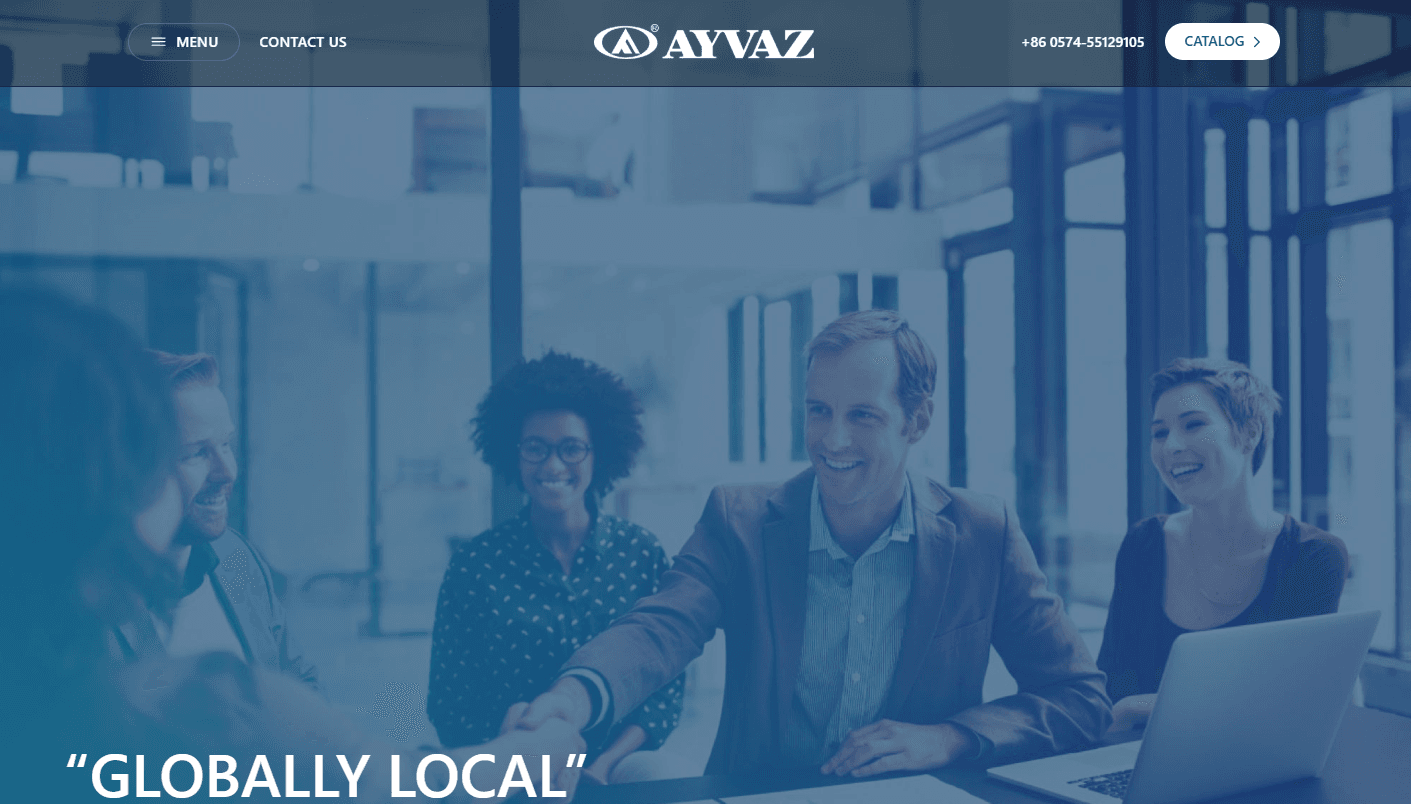
Ayvaz China is a B2B corporate platform built to support business operations and multi-role workflows for an industrial manufacturing environment. The platform combines a modern Next.js frontend with a Node.js and MongoDB backend, providing structured product experiences alongside role-specific administrative functionality.
Challenges:
The platform needed to support multiple types of users with different responsibilities and access levels. This required more than a public-facing corporate website: the system needed authenticated workflows, role-aware dashboards, granular permissions, secure backend operations, and real-time communication between relevant application areas.
Solution:
Implemented a full-stack architecture using Next.js and TypeScript on the frontend with Node.js, MongoDB, and Mongoose on the backend. Designed role-based access control for administrator and vendor workflows, implemented JWT-based authentication, and used bcrypt for secure password handling. Socket.io was integrated for real-time application communication, while Tailwind CSS and Framer Motion were used to build the responsive interface.
Key Features:
- Multi-role authentication
- Administrator dashboard
- Vendor workflows
- Role-based permissions
- Product and business information
- Authenticated application flows
- Real-time communication
- Secure backend operations
- Responsive B2B interface
Technical Highlights:
- Next.js and React for the frontend architecture
- TypeScript for strongly typed application development
- Node.js backend architecture
- MongoDB and Mongoose for data modeling
- JWT-based authentication
- bcrypt password hashing
- Role-Based Access Control for multi-role workflows
- Permission-aware dashboard architecture
- Socket.io for real-time functionality
- Tailwind CSS for responsive UI development
- Framer Motion for interface interactions
Results & Impact:
- Delivered a production B2B platform for an industrial business.
- Implemented multi-role workflows for administrators and vendors.
- Established permission-aware application and dashboard flows.
- Connected frontend workflows with a structured Node.js and MongoDB backend.
- Delivered the project as part of a team-based development process.